How to Make Custom Socks: Needle Count, Yarn and Logo Detail
How a custom sock goes from idea to knitting machine, why needle count decides your logo, and what to pick for yarn, cushion and length.
- Updated Nov 9, 2026
- 5 min read
- Tool: Sock logo preview
- By the CWF production team
The short version
- Most custom socks have the design knitted in. Every stitch is one dot of your logo.
- Needle count is the machine's resolution: more needles, finer knit, more detail.
- Keep logos bold and simple, with a limited number of colors.
- Cotton blends with a little elastane are the everyday standard. Terry loops add cushion.
- Ask for a linked toe, for a flat, comfortable seam.
Custom socks are one of the most fun products a brand can make, and one of the most misunderstood. They aren't printed like a tee. They're knitted, stitch by stitch, on a circular machine, and that changes how you design them.
How custom socks are made
A sock is knitted as a tube on a circular knitting machine, from the cuff down to the toe, with the heel shaped on the way. The toe is then closed, and the sock is washed, shaped on a board, paired and packed.
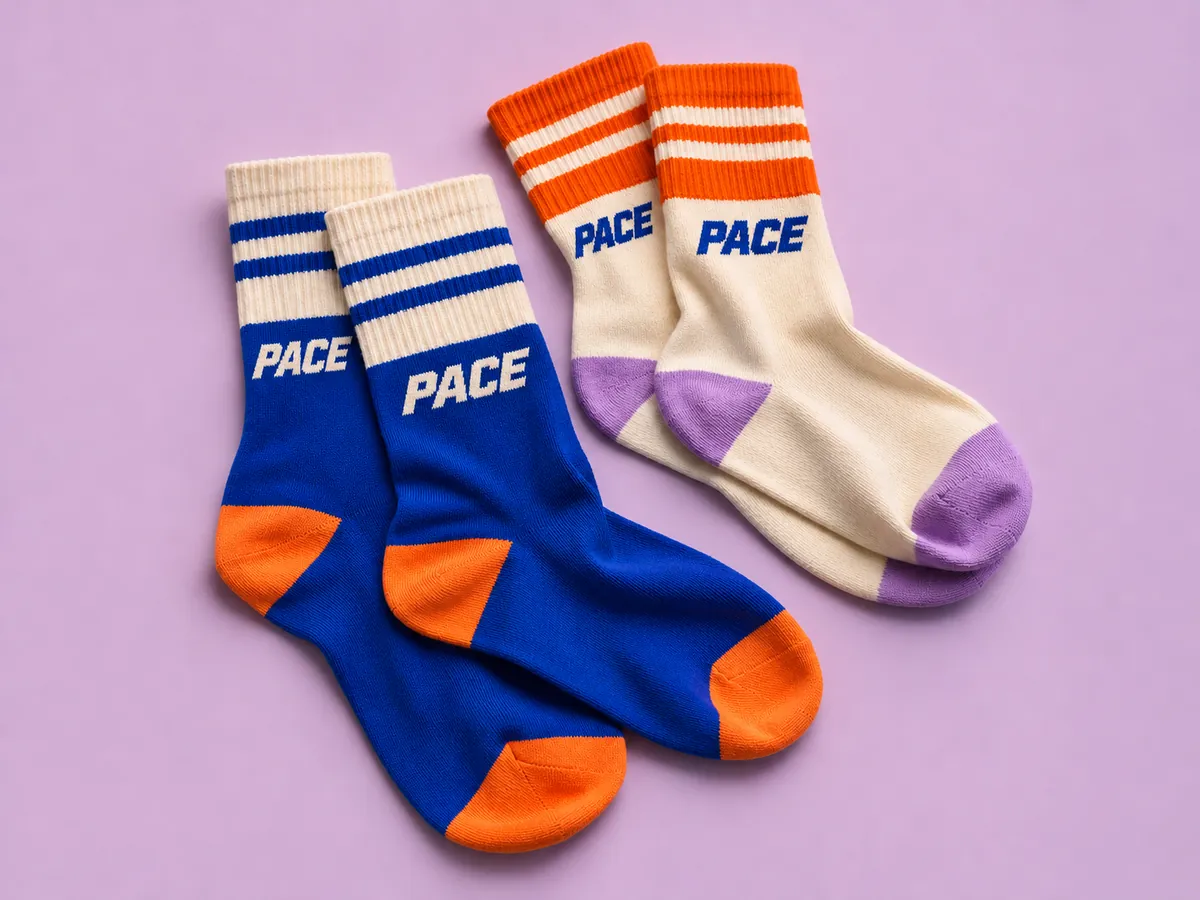
Your design is usually knitted in, using jacquard knitting. Several colored yarns feed into the machine, and each needle picks the right color for each stitch. The pattern is part of the fabric, so it can't crack or peel.
Knit-in vs printed
| Knit-in (jacquard) | Printed | |
|---|---|---|
| Look | Textured, classic, part of the sock | Flat, photographic, full color |
| Detail | Limited by the needle count | Very fine |
| Colors | A limited number per design | Unlimited |
| Inside | Floats of yarn on the inside | Clean |
| Durability | Excellent | Good, can fade with wear |
Printed socks, often made with sublimation, can reproduce photos, and usually need a high polyester content to take the print. Knit-in is the classic for brands, and what most people picture when they think of a custom sock.
Needle count: your sock's resolution
A sock machine's needle count is how many needles sit around its knitting cylinder. Each needle knits one column of stitches. More needles in the same circle means smaller stitches, a finer knit and more detail in your logo.
Think of it as pixels. Your logo is drawn in stitches, and how many stitches it gets across depends on the needle count and how much of the sock's circumference the logo covers. Fewer stitches, blockier logo. Try it.
Sock logo preview
See your logo knitted at 96 to 200 needles before you order.
Very few stitches. Go bigger, simplify, or pick a higher needle count.
- Lower needle counts knit thicker, chunkier socks, like sports and cushioned socks, with bolder designs.
- Mid needle counts, like 144, are a common middle ground for everyday socks.
- Higher needle counts, like 168 and 200, knit finer, thinner socks with more detail, like dress socks.
Designing for knitting
- Go bold. Thick shapes and strong contrast read best.
- Limit the colors. Every color is another yarn feeding the machine. Most designs work best with a handful, so ask how many your factory's machines take.
- Mind the floats. In jacquard, unused yarn runs along the inside. Long floats can catch toes, so very wide single-color areas are better broken up.
- Allow for stretch. A sock stretches around the leg, which widens your logo. Artwork is often adjusted to allow for it.
- Use the whole sock. Cuff, leg, heel, toe and sole can all carry color. The footbed is hidden in a shoe, so put the logo where people will see it.
Choosing the yarn
| Yarn | Good for | Notes |
|---|---|---|
| Combed cotton blend | Everyday and fashion socks | Soft and breathable, usually with nylon and elastane |
| Polyester or nylon blend | Sports and printed socks | Durable, dries fast |
| Merino wool blend | Hiking, winter, premium | Warm, breathable, resists odor |
| Bamboo viscose blend | Smooth dress socks | Very soft, with a slight sheen |
| Recycled yarns | Most styles | Recycled cotton and polyester blends are common |
Most socks are blends. Cotton or wool brings comfort, nylon brings strength, and a few percent of elastane makes the sock grip and spring back into shape.
Cushion, length and toe
Cushion
Terry loops knitted on the inside add cushioning. They can run under the sole only, the whole foot, or the entire sock. Sports socks usually have more, fashion socks less or none.
Length
- No-show: hidden inside the shoe, often with a silicone grip at the heel.
- Ankle: just above the shoe.
- Quarter: covers the ankle bone.
- Crew: mid-calf. The classic for branded socks, with the most room for a logo.
- Knee-high: sports kits and statement socks.
Toe seam
A basic machine-closed toe can leave a ridge across the toes. A linked toe is closed flatter, close to seamless, and is more comfortable. It's a small upgrade people feel straight away.
Packaging and finishing
Socks are usually sold in pairs, on a card header, with a paper band, in a hanging bag or in a box. A custom band or a box set turns a pair of socks into a gift. A woven label or a printed sole adds more branding. See all our custom socks and accessories.
Questions
What does needle count mean for socks?
It's the number of needles on a sock machine's knitting cylinder. Higher needle counts knit finer, thinner socks with more detail. Lower counts knit thicker socks with bolder designs.
Can I put any logo on custom socks?
Most logos work if they're bold enough. Very thin lines, small text and gradients don't knit well. Making the logo bigger, simplifying it, or using a print or a woven label for the detail usually solves it.
What's the best material for custom socks?
For everyday and fashion socks, a combed cotton blend with nylon and elastane is the standard. Merino blends suit hiking and winter, and polyester blends suit sports and printed socks.
What's the difference between knitted and printed socks?
Knitted socks have the design knitted into the fabric with colored yarns, which is durable and textured. Printed socks have it printed on, which allows full color and photos but usually needs a high polyester content.
What is a linked toe?
A toe closed with a flat, near seamless join, instead of a bulky ridge across the toes. It's more comfortable, and a common sign of a better sock.
Written by the CWF production team. CWF makes apparel, bags, headwear, accessories, packaging and merch for brands, and runs sampling, production and quality control through a network of specialist factories. Updated Nov 9, 2026.
Got something to make? Start here.
Tell us what you have in mind. We reply within 24 hours with options, pricing and timelines.
Keep reading
 AccessoriesGrip sock designer
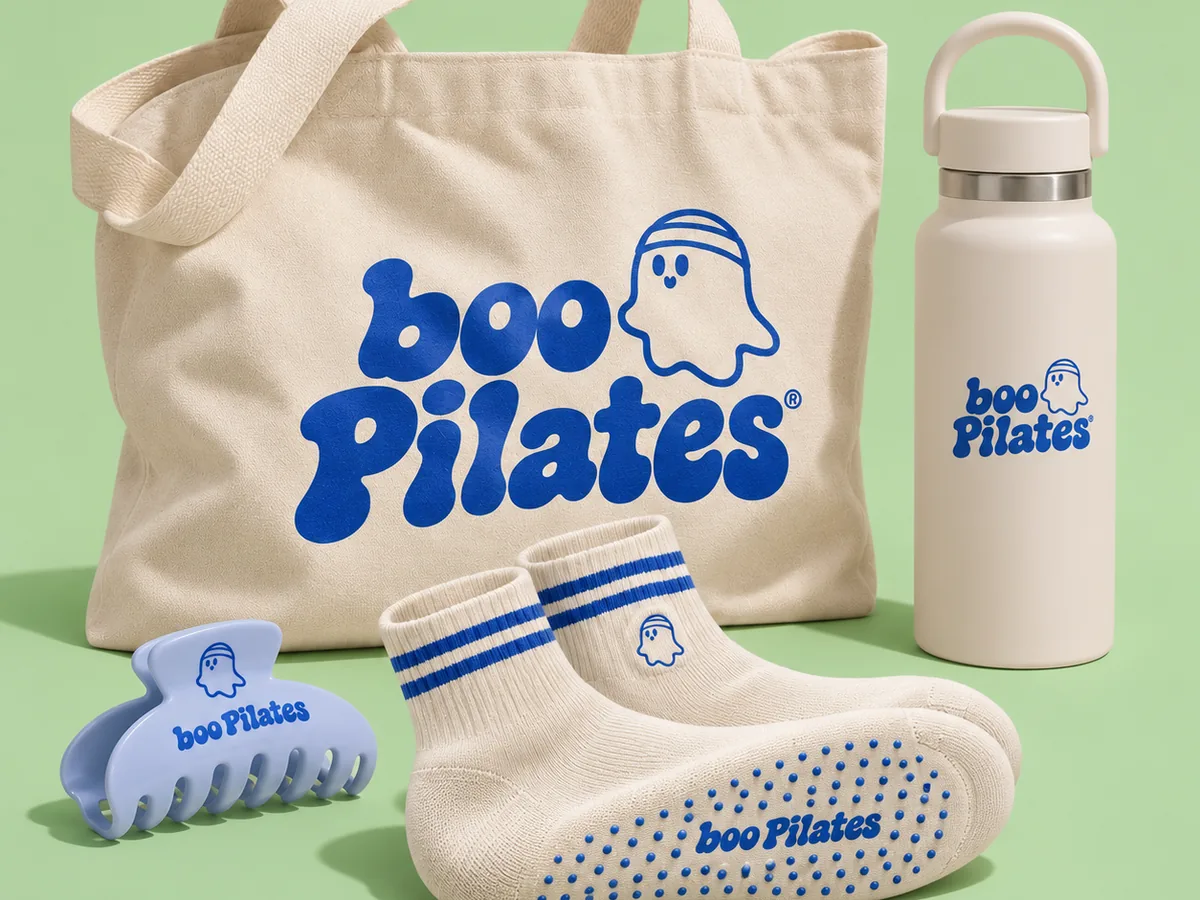
How to Create Custom Merchandise for Your Pilates Studio
Your clients already need grip socks, a bottle and something to carry it all in. Here's how to make them yours, from the yarn on the sock to the kit at your front desk.
 Accessories
How to Launch an Accessories Line for Your Skincare Brand
Headbands, pouches and towels are part of the routine, and the easiest way to put your brand in your customer's bathroom. Here's how to make them feel as good as your formulas.
 PricingCost per unit calculator
MOQ Explained: Minimum Order Quantities, and How to Get Them Down
Why minimums exist, what they really cost you, and seven honest ways to get them down. With a calculator for the real price per piece.