

MOQ Explained: Minimum Order Quantities, and How to Get Them Down
Why minimums exist, what they really cost you, and seven honest ways to get them down. With a calculator for the real price per piece.
- Updated Nov 26, 2026
- 5 min read
- Tool: Cost per unit calculator
- By the CWF production team
The short version
- MOQ is the smallest order a manufacturer will take, usually per style and sometimes per color.
- Minimums exist because setup, materials and machine time cost about the same for 50 pieces as for 5,000.
- Judge a quote on the real cost per piece, with one-off costs and shipping in, not the unit price alone.
- Stock fabrics, fewer colors and simpler decoration are the fastest ways to lower a minimum.
- CWF minimums start at 50 units per style.
MOQ stands for minimum order quantity: the smallest order a manufacturer will accept for a product. It's often the first number a new brand hears, and the first one that hurts. But a minimum isn't random. Once you know where it comes from, you can usually find a way to work with it.
What does MOQ mean?
In clothing and most custom products, an MOQ is usually set per style, and sometimes per color or per size. "300 per style, 100 per color" means one hoodie in three colors at 100 each works, but 300 hoodies split across six colors doesn't.
Always ask exactly how a minimum is counted. It can be the difference between an order you can afford and one you can't.
| How it's quoted | What it means |
|---|---|
| Per style | The total for one design, across all its colors and sizes |
| Per color | The minimum for each colorway of that design |
| Per size | Rare, but it happens with unusual sizes |
| Per order | A total across several styles, common for decoration on blanks |
Why manufacturers set minimums
Every production run has costs that barely change with quantity. The more pieces you make, the thinner those costs are spread.
- Setup. Screens for printing, digitizing for embroidery, molds for rubber patches and hardware, plates and dielines for packaging. Each is paid once per design.
- Materials. Mills sell fabric by the roll, and dye to order in set batches. A custom color comes with the mill's own minimum, which becomes yours.
- Machine time. Switching a line to a new product takes time. An hour of setup weighs far more on 50 pieces than on 5,000.
- Planning and labor. Cutting, sewing, checking and packing a small run needs the same planning as a big one.
That's why a factory built for huge volumes of one product might ask for thousands, while a workshop set up for smaller runs can do hundreds, or less.
What a minimum really costs you
The unit price on a quote isn't what each piece costs you. Add the one-off costs, shipping and duties, divide by the quantity, and you have the real number, sometimes called the landed cost. On small orders, one-off costs can be a big share of it.
Cost per unit calculator
See what each piece really costs once setup and shipping are in.
Real cost per piece at 200 pieces. $3,100 in total.
Selling at $45.00 leaves $29.50 per piece. One-off costs add $1.50 to each piece at this quantity.
Change the quantity and watch the bars. One-off costs fall fast per piece as the order grows, then flatten out. Past that point, ordering more stops saving you much, and starts tying up cash and shelf space.
Seven ways to lower your MOQ
- Use stock fabric and colors. Fabric the mill already makes and holds avoids a custom dye minimum. Pick from what's on the shelf.
- Cut the number of colorways. Two colors at 100 each is easier to make than four at 50.
- Simplify the decoration. Fewer print colors, one placement instead of three, or one woven patch used across several products.
- Start from a blank. Decorating a ready-made product skips pattern making and fabric minimums entirely.
- Share trims across styles. One zipper, one drawcord and one woven label across the range lets each component reach its own minimum.
- Be flexible on timing. A factory may fit a small run around a bigger one, if you're not in a rush.
- Pay a little more per piece. Some manufacturers will go under their minimum for a surcharge. Ask what it would cost.
MOQs by product
Minimums vary by product, technique and manufacturer, so treat any number you read online as a rough guide. What drives them most:
- Decorated blanks: usually the lowest, because the product already exists.
- Cut-and-sew apparel: higher, driven by fabric and the setup of a new pattern.
- Knitted goods like socks and beanies: driven by yarn and machine setup. See our socks guide.
- Molded items like rubber patches, hardware and drinkware: driven by the mold.
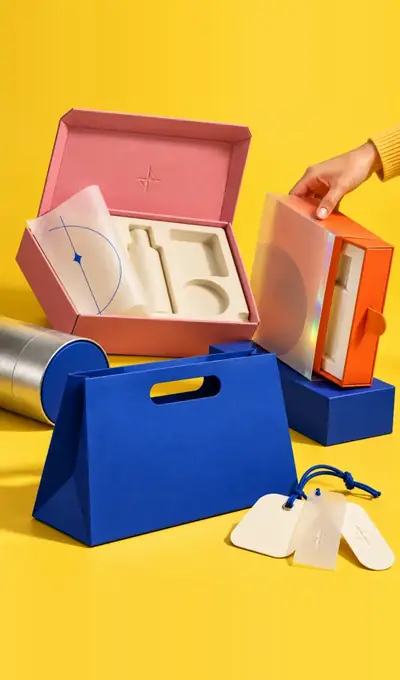
- Packaging: driven by printing setup. Our packaging guide covers the formats.
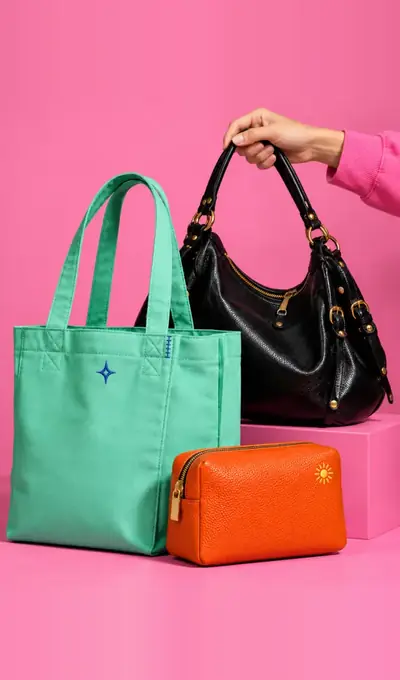
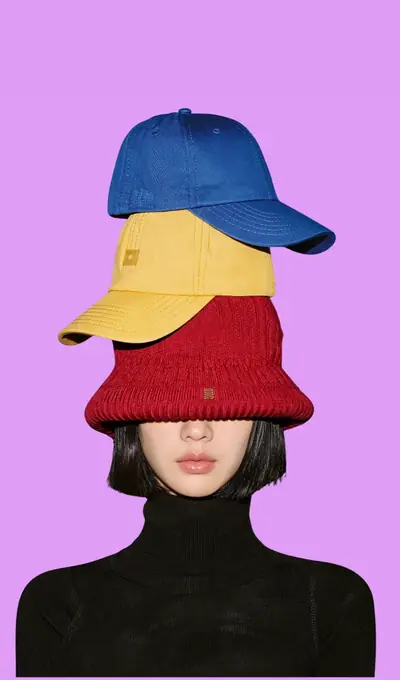
At CWF, minimums start at 50 units per style. Some products need more, depending on how they're made. Tell us what you have in mind and we'll give you the exact number. See how it works for low MOQ caps, custom bags and small-run clothing.
How to talk about MOQ with a manufacturer
Put your quantity in the first message. It saves everyone time, and the right partner will tell you what's possible at that size. Then ask three questions: how the minimum is counted, what's driving it for this product, and what you could change to get under it.
The fastest way to lower a minimum is to ask what's driving it.
Questions
What does MOQ mean?
MOQ means minimum order quantity: the smallest number of units a manufacturer will make in one order, usually per style and sometimes per color.
What is a typical MOQ for clothing?
It depends on the product and the manufacturer. Decorated blanks can start very low, while cut-and-sew clothing in custom fabric usually needs more, because of fabric and setup minimums. CWF starts at 50 units per style.
Can I negotiate an MOQ?
Often, yes. Stock fabric, fewer colors, simpler decoration or a slightly higher unit price can all bring a minimum down. Ask what's driving the number for your product.
Is MOQ per color or per style?
Both exist. Always ask how a minimum is counted: per style, per color, per size or per order.
Why is the unit price higher on small orders?
One-off costs like setup, sampling and machine changeovers are spread over fewer pieces, and materials bought in small amounts cost more.
Written by the CWF production team. CWF makes apparel, bags, headwear, accessories, packaging and merch for brands, and runs sampling, production and quality control through a network of specialist factories. Updated Nov 26, 2026.
Got something to make? Start here.
Tell us what you have in mind. We reply within 24 hours with options, pricing and timelines.
Keep reading
 ProductionTech pack checklist
What Is a Tech Pack? What Goes In One, and How to Make Yours
The document that turns your idea into something a factory can quote, sample and make the same way every time. Here's what goes in it.
 ProductionLaunch date planner
Manufacturing Lead Times: How Long Custom Production Really Takes
Every step between your brief and boxes at your door, how long each one takes, and how to plan backwards from a launch date.
 ApparelManufacturer scorecard
How to Find a Clothing Manufacturer (and Know You Picked the Right One)
Where to look, what to ask, and how to tell a good partner from a bad first order. Plus a scorecard to rate anyone you talk to.