

What Is a Tech Pack? What Goes In One, and How to Make Yours
The document that turns your idea into something a factory can quote, sample and make the same way every time. Here's what goes in it.
- Updated Nov 4, 2026
- 5 min read
- Tool: Tech pack checklist
- By the CWF production team
The short version
- A tech pack is your product's instruction manual: sketches, measurements, materials, colors, artwork and construction.
- Six parts matter most: flats, a measurement chart, materials, colors, artwork placement and quantities.
- It doesn't need to be perfect to start. It needs to be clear.
- Every sample round updates it, and the approved version is what the bulk is checked against.
- No tech pack yet? Send what you have. We build it with you.
A tech pack, short for technical package, is the document that tells a manufacturer exactly how to make your product. Without one, the factory fills the gaps with its own guesses. With one, you get accurate quotes, fewer sample rounds, and a product that comes out the same every time you reorder.
What a tech pack does
It does three jobs. It lets a manufacturer quote properly, because they can see the fabric, the trims and the work involved. It guides the sample, so the first one is close. And it sets the standard the bulk order is checked against.
The third job is the one people forget. If a measurement or a color isn't written down, there's nothing to hold production to.
What goes in a tech pack
1. Flat sketches
Technical drawings of the product laid flat, front and back, with no body inside and no styling. Add close-ups of details like pockets, zips or a hood. They don't need to be beautiful. They need to be accurate and in proportion.
2. Measurements
A spec sheet listing every point of measure, like chest width, body length or sleeve length, for every size, each with a tolerance. Include a diagram showing exactly where each one is taken. If you own a garment that fits the way you want, measure it and start there.
| Point of measure | S | M | L | Tolerance |
|---|---|---|---|---|
| Chest width, 2 cm below armhole | 54 | 57 | 60 | ± 1 |
| Body length, from high point shoulder | 70 | 72 | 74 | ± 1 |
| Sleeve length, from shoulder seam | 60 | 61 | 62 | ± 1 |
The jumps between sizes are called grading. If you're not sure how your sizes should step, a pattern maker or your manufacturer can set the grade rules with you.
3. Materials
The bill of materials: the main fabric with its composition and weight, linings, interlinings, thread, and every trim. Give the fabric weight in GSM. Our GSM guide explains how to choose one.
4. Colors
A Pantone reference for each fabric, trim, thread and print color. A color described in words, like "warm off-white", comes back in a dozen shades. For dyed fabric, ask for a lab dip, a small swatch dyed to match, before the bulk is dyed.
5. Artwork and placement
Vector files for every logo and graphic, plus the size and exact position of each placement, measured from a fixed point like the center front or a shoulder seam. Say how each one is applied: print, embroidery or patch. Not sure which? Our decoration guide compares them.
6. Construction
How it's sewn: stitch types, seam finishes, hems, topstitching, and anything else that changes how it looks and lasts. Mark them on the flats with short notes.
7. Labels, trims and packaging
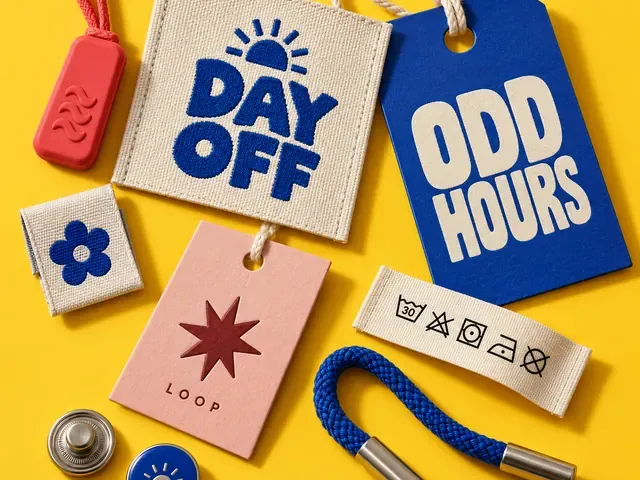
Main label, care label, size label, and where each one goes. Zippers, buttons, drawcords and eyelets. How the product is folded and packed, plus hang tags and barcodes.
8. Quantities
How many of each size and color. It changes fabric planning and price, so even an estimate helps.
Check yours
Tick what you already have. The six core parts are enough for a quote and a first sample. The rest can come as you go.
Tech pack checklist
Tick what you have, see what's missing, send it as a brief.
Early stage. That's fine. We can build it with you.
Core still missing: flat sketches, measurements, materials, colors, artwork and placement, quantities.
How a tech pack changes through sampling
A tech pack is a living document. Each sample round ends with comments, the comments become changes, and the changes go back into the tech pack with a new version number and date.
- Proto sampleA first look at the shape and construction, often not in the final fabric.
- Fit sampleChecks measurements and fit on a body. Update the spec sheet with what changes.
- Pre-production sampleMade in the real bulk materials. Once you approve it, the tech pack is frozen.
- Top of production samplePulled from the first finished bulk pieces, to check the run matches what you approved.
Simple products, like a logo on a blank, often go straight to a single sample. New cut-and-sew designs usually need more rounds.
Do you need a tech pack to start?
No. Plenty of brands start with a sketch, a reference photo and a few notes. A good manufacturer can work from that and build the tech pack with you during sampling. What you do need is to know what you want, and to write down every decision as you make it.
If you're making several products, a proper tech pack for each one pays off fast. Every reorder, every new color and every new factory starts from the same reference.
Common mistakes
- Measurements with no tolerance. Nothing to check against, so every difference turns into an argument.
- Colors in words, not codes. Use Pantone references.
- Artwork as a low-resolution image. Send vector files, like AI, EPS, PDF or SVG.
- Placement with no reference point. "Center chest" isn't a position. "8 cm below the neck seam, centered" is.
- Changes made only in chat. Put every change back into the tech pack, or it gets lost.
Questions
What is a tech pack in fashion?
A tech pack is a document that tells a manufacturer how to make a product. It covers flat sketches, measurements, materials, colors, artwork placement, construction, labels and packaging.
How much does a tech pack cost?
It depends on the product and who makes it. You can build one yourself in a design program and a spreadsheet, hire a freelance technical designer, or work with a manufacturer that builds it with you during sampling.
Can a manufacturer make my product without a tech pack?
Many can start from a sketch and reference photos and build the tech pack with you. Expect more sample rounds, and you'll still want everything written down before bulk.
What software is used to make a tech pack?
Adobe Illustrator for the flats and a spreadsheet for the spec sheet are the common choice. There are also dedicated tech pack and PLM tools. The tool matters less than the content being complete and clear.
What's the difference between a tech pack and a spec sheet?
The spec sheet is one part of the tech pack: the measurement chart. The tech pack also covers materials, colors, artwork, construction and packaging.
Written by the CWF production team. CWF makes apparel, bags, headwear, accessories, packaging and merch for brands, and runs sampling, production and quality control through a network of specialist factories. Updated Nov 4, 2026.
Got something to make? Start here.
Tell us what you have in mind. We reply within 24 hours with options, pricing and timelines.
Keep reading
 ProductionLaunch date planner
Manufacturing Lead Times: How Long Custom Production Really Takes
Every step between your brief and boxes at your door, how long each one takes, and how to plan backwards from a launch date.
 PricingCost per unit calculator
MOQ Explained: Minimum Order Quantities, and How to Get Them Down
Why minimums exist, what they really cost you, and seven honest ways to get them down. With a calculator for the real price per piece.
 ApparelManufacturer scorecard
How to Find a Clothing Manufacturer (and Know You Picked the Right One)
Where to look, what to ask, and how to tell a good partner from a bad first order. Plus a scorecard to rate anyone you talk to.