




How to Make Heavyweight T-Shirts: Fabric, GSM and Construction
What actually makes a tee feel heavy, hang boxy and keep its collar: the weight, the yarn, the knit, the pattern and the construction. Written from the factory side, with a spec builder.
- Updated Nov 19, 2026
- 14 min read
- Tool: Tee spec builder
- By the CWF production team
The short version
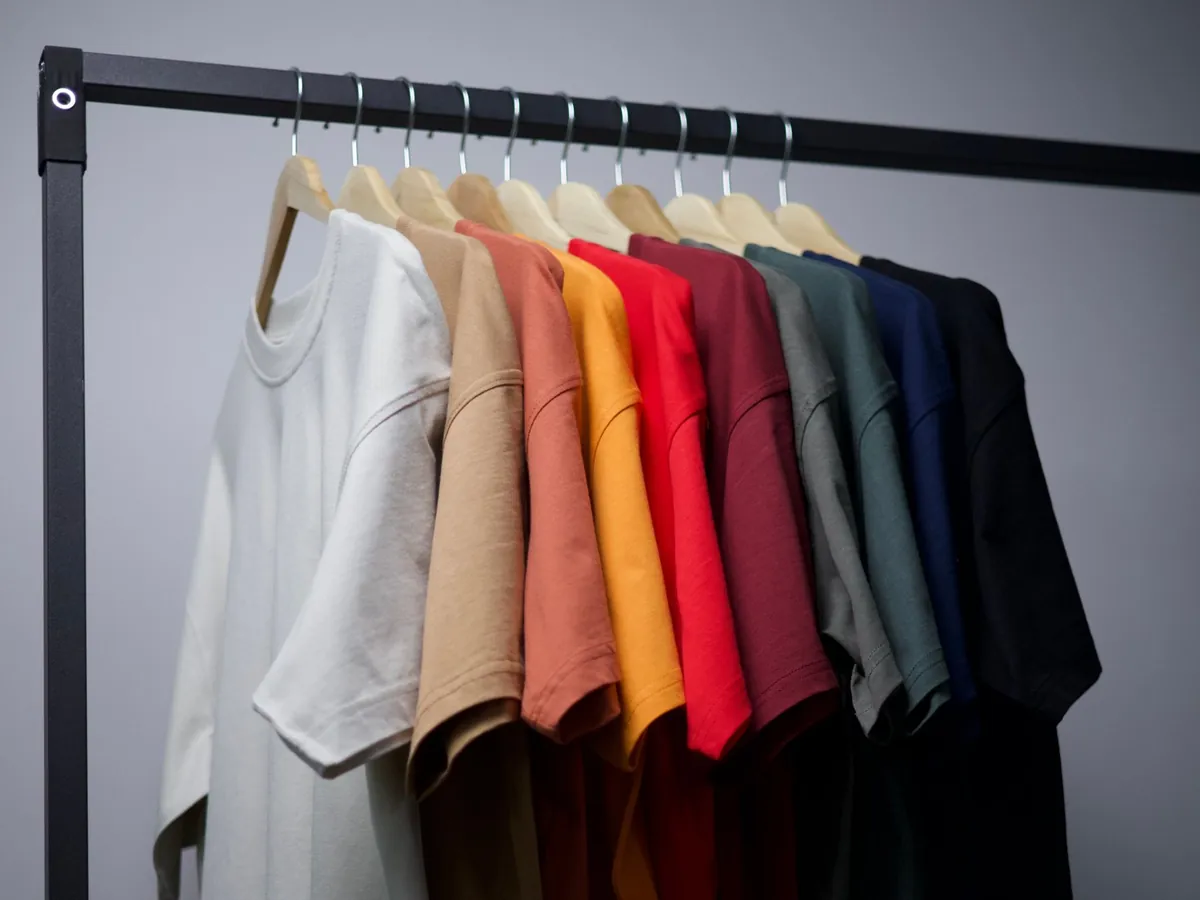
- Most streetwear brands mean 220 GSM and up when they say heavyweight. There's no official cutoff, so always compare the actual GSM.
- Weight isn't quality. Yarn, knit density and finishing decide whether a heavy tee feels dense and soft or stiff and rough.
- A boxy fit is a pattern: a wide, short body, dropped shoulders and wide sleeves. Sizing up a regular tee doesn't get you there.
- The collar gives a tee away first. A dense rib with a little elastane, a taped back neck and taped shoulders keep it in shape.
- Agree shrinkage, twist and color standards before bulk, and test a washed piece from production, not just the sample.
A heavyweight tee looks like the simplest product a brand can make. Then the samples arrive: one is stiff, one is see-through in white, one has a collar that waves after a wash, and one twists its side seams to the front. The difference between a tee people reorder and one they forget is decided long before it's printed.
The short answer: a heavyweight t-shirt is usually 220 GSM and up, knitted from thicker cotton yarn into a dense single jersey, cut on a boxy or oversized pattern, and finished with a thick rib collar, taped seams and coverstitched hems. To make one, choose the weight, yarn, fit, collar and construction, approve a sample, then approve a pre-production sample in bulk fabric before the full run.
This guide covers each of those decisions the way a heavyweight t-shirt manufacturer works through them, and what to check before you sign off. Building as you go? The tee spec builder turns your choices into a spec you can send.
What is a heavyweight t-shirt?
There's no official standard. Some blank catalogs call anything over about 6 oz (around 200 GSM) heavyweight. For most streetwear brands, heavyweight starts at 220 GSM and the statement tees sit well above that. These are the tiers we use.
| Weight | GSM | About oz per sq yd | How it feels |
|---|---|---|---|
| Everyday | 150 to 200 | 4.4 to 5.9 | Soft, breathable and drapey. The classic retail tee |
| Heavyweight | 220 to 260 | 6.5 to 7.7 | Dense and opaque, with a structured drape |
| Super heavy | 260 to 300 | 7.7 to 8.8 | Thick and boxy, the streetwear standard |
| Ultra heavy | 300 and up | 8.8 and up | Stiff at first, stands away from the body and softens with wear |
Weight changes more than the feel. Heavier jersey is more opaque, so a white tee stops showing through. It holds a boxy shape, takes a big print without puckering, and survives more washes. It also wears warmer and dries slower, so a summer tee and a winter layer shouldn't share a weight. Our GSM guide has a weight explorer for every product.
Which weight should your tee be?
- Hot climates and summer drops: everyday to light heavyweight, about 180 to 220 GSM, so it breathes.
- Year-round basics: heavyweight, about 220 to 260 GSM. Opaque and structured, still easy to wear.
- Boxy statement tees: super heavy, about 260 to 300 GSM, for the square shape and a big print.
- Layering and cold-season drops: ultra heavy, 300 GSM and up, closer to a sweatshirt in feel.
Heavyweight blanks or custom-made?
| Route | What you get | Best for | Limits |
|---|---|---|---|
| Heavyweight blanks | A stock tee from a blank brand, printed or embroidered with your design | Testing designs, merch, fast drops | Stock colors and fit, and the same tee other brands use |
| Private label | A manufacturer's heavyweight tee, with your labels and packaging | Launching quickly on a proven body | Limited changes to pattern, fabric and collar |
| Cut and sew | Your own jersey, weight, color, pattern, collar and finish | A signature tee your brand is known for | Needs a spec, sampling and a fabric order per color |
Cut and sew is where a heavyweight tee becomes yours: the exact weight, a custom color, your boxy proportions and a collar that doesn't look like anyone else's. Choosing who makes it? Our streetwear manufacturer guide covers how to find and vet a factory.
Weight isn't everything: yarn, knit and finish
Two tees at 260 GSM can feel like different products. GSM tells you how much fabric there is. The yarn, the knit and the finishing tell you how good it is.
The yarn
| Yarn | How it's made | Feels like | Good to know |
|---|---|---|---|
| Combed ring-spun | Short fibers combed out, the rest twisted fine and tight on a ring frame | Smooth, soft, clean surface | Pills least and holds the sharpest print detail |
| Carded ring-spun | Ring-spun without combing, so some short fibers stay in | Soft with a little texture | A good middle ground |
| Open-end | Fibers spun fast in a rotor, without the same twisting | Drier, bulkier, more textured | The vintage tee hand. Fuzzier, pills more and prints less crisply |
Yarn thickness is measured as a count, and a lower number means a thicker yarn. Heavyweight jersey is usually knitted from thicker yarn, such as 16s or 20s, where a soft everyday tee might use 30s or finer. That's how a mill reaches the weight, and why some heavy tees feel coarse: thick open-end yarn gets the number without the softness.
The knit and the finish
- Single jersey is the knit behind almost every tee: smooth on the face, with stretch across the width.
- Knit density matters as much as yarn. A tight knit at 260 GSM feels firm and holds its shape. A loose knit at the same weight feels floppy and grows in the wash.
- Compacting shrinks the fabric mechanically at the mill, so there's less shrinkage left for your customer.
- Enzyme washing clears surface fuzz for a cleaner face and softer hand. A silicone softener makes heavy jersey feel less stiff on day one.
Fit: boxy, oversized or regular
Fit lives in the pattern. A heavyweight tee in a regular pattern just looks like a thick tee. The shape most streetwear brands want comes from proportions.
- Regular: set-in sleeves and a body that follows the torso. Clean and classic.
- Oversized: a wider and longer body, dropped shoulders, and sleeves that reach toward the elbow.
- Boxy: a wide body that's short for its width, dropped shoulders and wide, short sleeves. Sometimes cropped. Heavy jersey holds the square shape.
Getting the proportions right is the whole game. A boxy tee with too much length turns into an oversized one. A big chest with narrow sleeves looks off. Write each point into your tech pack, or send a tee whose fit you love and say what to change.
| Point of measure | How it's usually measured | What it changes |
|---|---|---|
| Body length | From the high point of the shoulder to the hem | Cropped, boxy or long |
| Chest width | Straight across, about 2.5 cm (1 inch) below the armhole | How wide the tee looks |
| Shoulder width | Seam to seam across the back | How far the shoulder drops |
| Sleeve length and opening | From the shoulder seam, and the width at the hem | Boxy tees use short, wide sleeves |
| Collar | Width seam to seam, front and back neck drop, rib height | A tight, thick collar reads premium |
| Hems | Height of the sleeve and bottom hems | Wider hems suit heavy jersey |
Construction details that make a heavyweight tee
This is where premium tees separate from blanks. None of these details show in a product photo, and all of them show after ten washes.
- The collar: usually a 1x1 rib. A denser rib with a little elastane snaps back instead of stretching into a wavy collar. Thicker collars read premium on heavyweight tees, but the rib has to suit the weight of the body, or it pulls.
- Back neck tape: a strip over the inside neck seam, so it doesn't scratch. Plain, contrast or printed with your brand.
- Shoulder tape: a tape sewn into the shoulder seams stops them stretching under the weight of heavy jersey.
- Side seams or tubular: a tubular body is knitted as a tube with no side seams, so each size comes from a set tube width. Side seams let the pattern take any shape, which is why boxy and oversized tees are cut with them.
- Hems: double-needle coverstitch at the sleeves and bottom, which stretches with the fabric. Many heavyweight tees use a slightly wider hem.
- Twist control: knitted fabric can twist after washing, pulling the side seams toward the front. It starts in the yarn and the knitting, and it's controlled by good mills, careful cutting and side-seamed construction.
Colors, dyes and washes
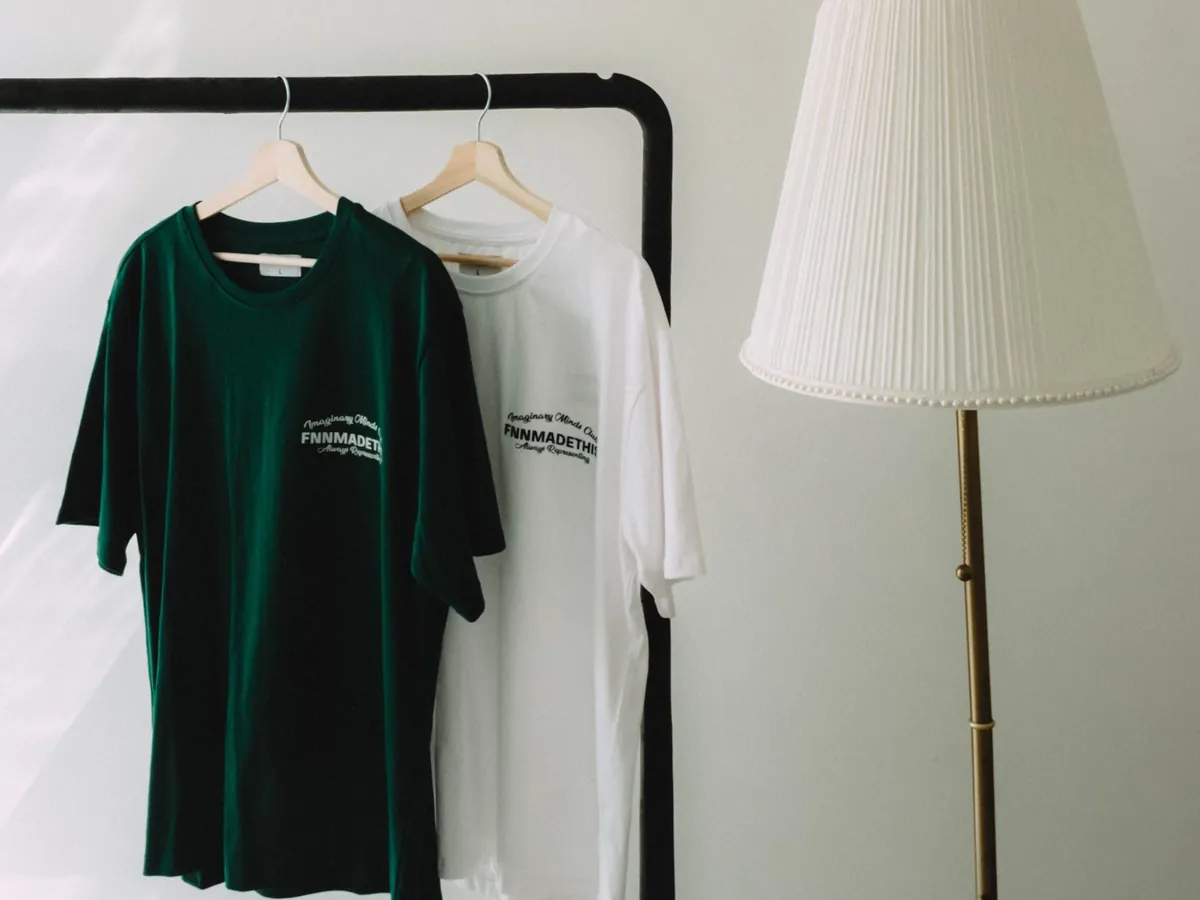
Most tees are cut from fabric that's already dyed, usually with reactive dyes that bond to cotton and hold their color through washing. Each color is dyed in a batch, called a dye lot, which is why custom colors carry a fabric minimum and why shades can vary slightly between batches. Send Pantone references and approve a lab dip before bulk, then check that the collar rib matches the body.
- Garment dye: the tee is sewn in undyed fabric and dyed whole, for a soft, lived-in color. It shrinks in the process, so the pattern is cut larger.
- Pigment dye: a faded, vintage look that keeps fading with every wash.
- Enzyme or silicone wash: softens heavy jersey and takes away the stiff, new feel.
- Acid or mineral wash: marbled, worn-in effects for vintage-style pieces.
Heather colors, like heather grey, usually blend cotton with another fiber to get the speckled look. That means they aren't 100% cotton, and they take garment dye and some prints differently. Check the composition of every color, not just the base fabric.
Printing and embroidery on heavyweight tees
Heavy jersey is the best base for a print that a tee can offer. It's stable, opaque and doesn't pucker under a big print. The technique still has to match the fabric and the design.
| Technique | Looks like | Works best |
|---|---|---|
| Plastisol screen print | Bold, opaque color that sits on top | Big graphics and solid colors, on any color tee |
| Water-based screen print | Soft ink that soaks into the fabric | Cotton tees where you want no feel on the print |
| Discharge | Removes the dye and replaces it, with almost no hand feel | Dark, 100% cotton tees dyed with dischargeable dyes |
| Puff print | Raised, soft 3D ink | Bold logos and lettering, no fine lines |
| DTG | Full-color, detailed print | Small runs and photographic art on 100% cotton |
| Embroidery | Stitched, textured logo | Small chest logos. Heavy jersey supports it without puckering |
Combed ring-spun jersey holds fine detail best, because there are fewer loose fibers to break up the ink. Wondering what lasts longer, embroidery or print? Our decoration guide compares every technique, with a picker for your design.
Build your tee spec
Pick your options to get a spec you can send to a manufacturer or drop into your tech pack. It flags the combinations that cause trouble in production.
Tee spec builder
Pick the weight, yarn, fit and collar. Get a heavyweight tee spec you can send.
Combed ring-spun jersey, about 260 to 300 GSM (about 7.7 to 8.8 oz). Thick and boxy, the streetwear standard.
Your spec
- Fabric100% cotton single jersey, combed ring-spun, about 260 to 300 GSM (about 7.7 to 8.8 oz)
- FitBoxy cropped fit, wide short body, dropped shoulders, wide sleeves
- BodySide-seamed body
- CollarThick 1x1 rib collar with a little elastane, taped back neck
- Seams and hemsTaped shoulders, double-needle coverstitch hems
- FinishNo wash
- LogoScreen print
Quality checks for heavyweight tees
An approved sample proves a factory can make your tee once. These are the checks that make the bulk match it.
| Check | How | Watch for |
|---|---|---|
| Fabric weight | Weigh a cut swatch against the agreed GSM | Bulk jersey lighter than the sample jersey |
| Measurements | Measure every point in every size against the size chart and its tolerances | Graded sizes drifting while the base size is perfect |
| Shrinkage | Wash to AATCC 135 for fabric, or AATCC 150 for finished garments, then measure again | Length shrinking more than width |
| Twist | Wash and measure how far the side seams move, for example to AATCC 179 | Side seams turning toward the front |
| Collar | Stretch the collar, check it recovers and lies flat after washing | A wavy, stretched-out collar |
| Color | Compare against the approved lab dip, and wash for colorfastness, for example to AATCC 61 | Shade differences between lots, dark colors bleeding |
| Check placement and size, then wash, stretch and rub the print | Cracking, fading or peeling after washing |
What determines the cost of a heavyweight tee?
There's no fair price without a spec. Printing a stock heavyweight blank is one process on a finished product. A cut-and-sew boxy tee in a custom color, with a thick collar, shoulder tape, a garment dye and a puff print, means sourcing yarn, knitting and dyeing jersey, developing a pattern, cutting, sewing, washing and printing.
- Fabric: the weight, the yarn type and count, the composition and the finish.
- Color: stock or custom dyed, garment dyed or washed, and how many colorways.
- Quantity: setup work is fixed per run, so it weighs more on each piece in a small run.
- Construction: collar, tapes, side seams, hems and any paneling or pockets.
- Decoration: the technique, the number of colors and placements.
- Labels, trims and packaging: neck labels, hang tags, polybags and boxes.
- Shipping: air or sea, the shipping term, and duties where it lands.
CWF quotes each tee from its spec, so the quote reflects what you're actually making. Our MOQ guide shows how quantity spreads the fixed costs.
Minimums and timeline
Decorated blanks allow the smallest runs. Cut and sew in a stock fabric color comes next. A custom color usually carries a fabric minimum per color, because the mill dyes in batches. At CWF, most garments start at 50 units per style, sizes can usually be split within that, and any per-color fabric minimum is confirmed upfront.
At CWF, samples typically take 3 to 10 days and production 30 to 45 days after sample approval, with shipping on top. Custom fabric, garment dye and washes can add time. Our lead times guide shows how to plan backwards from a drop date.
Heavyweight tee examples
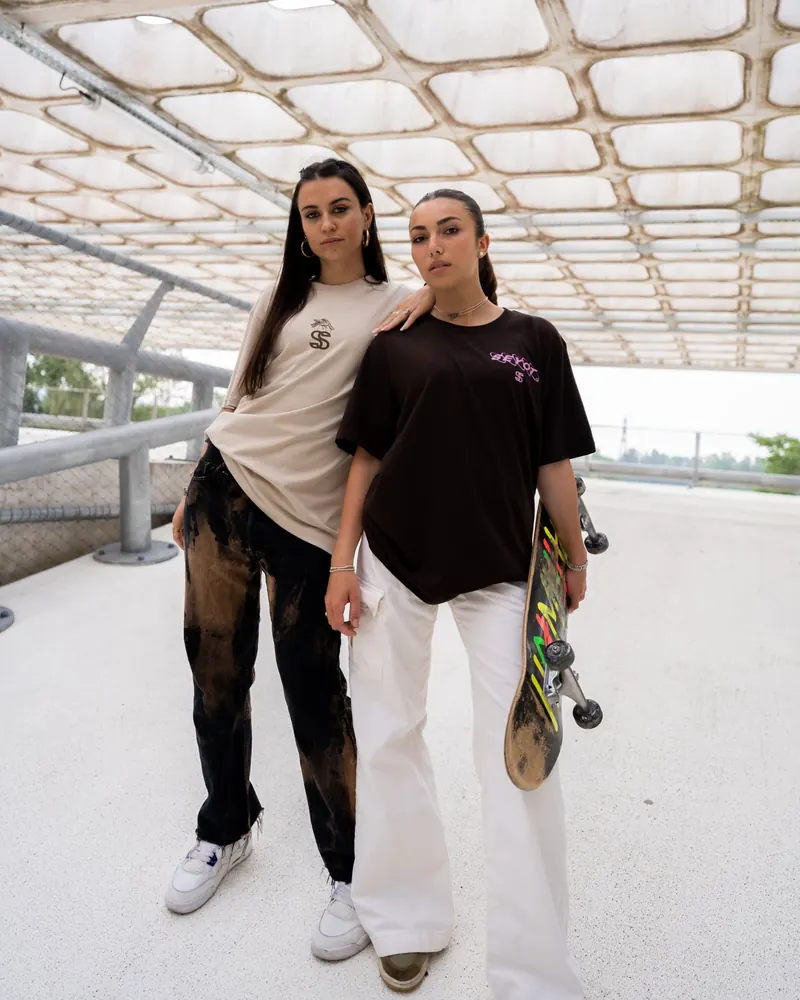 Oversized tees with small chest logos
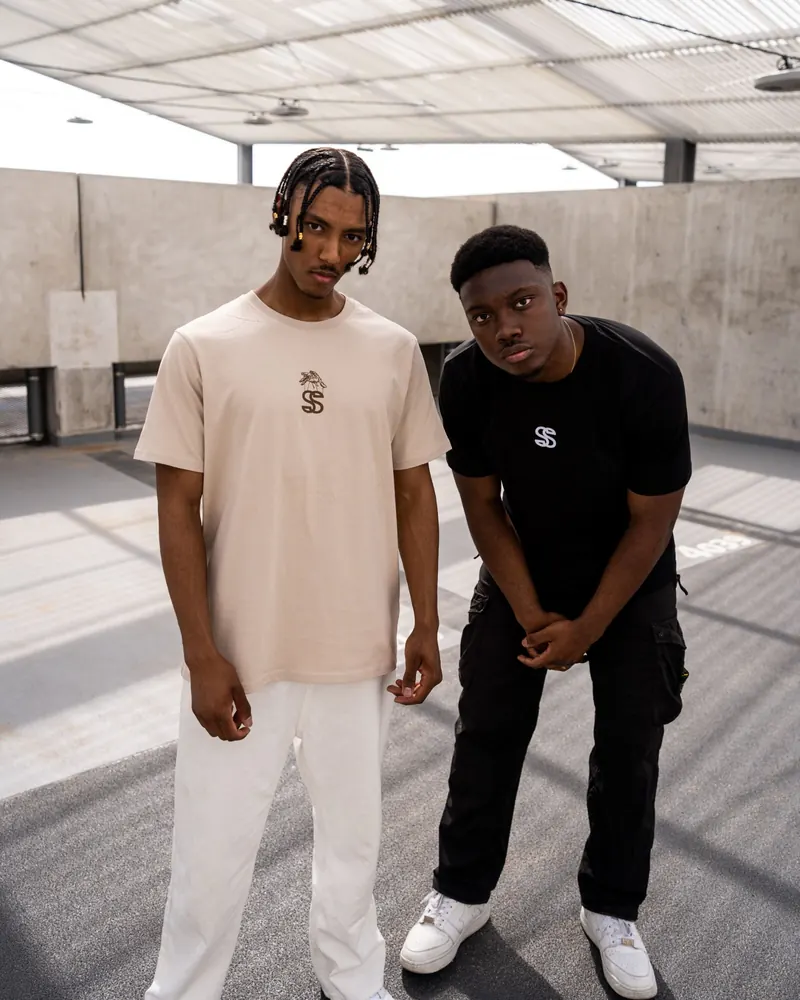 Minimal chest logos on beige and black
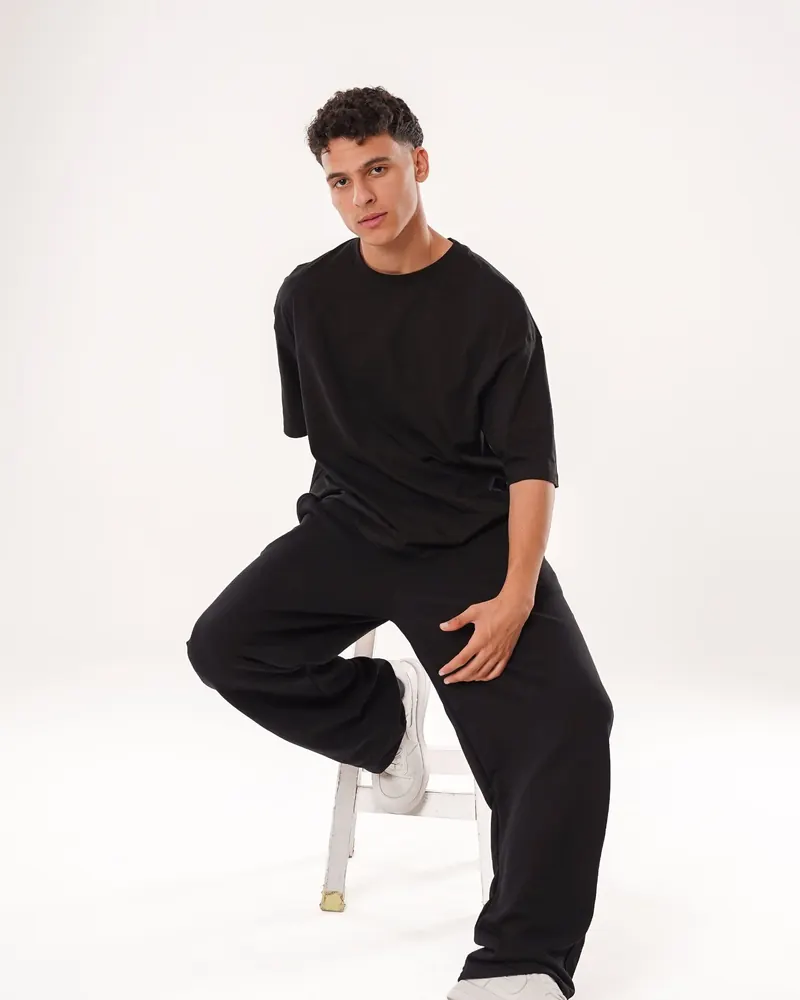 Black oversized tee
 Charcoal tee and white crewneck
 Boxy fit with dropped shoulders
Mistakes brands make with heavyweight tees
The mistakeChoosing on GSM alone.
Do this insteadA heavy tee in coarse open-end yarn can feel stiff and rough. Ask for the yarn and finish, and wash the swatches before you choose.
The mistakeMaking boxy by sizing up.
Do this insteadA regular XL is long, not boxy. Boxy needs its own pattern: a wide, short body, dropped shoulders and wide sleeves.
The mistakeUsing a light collar on a heavy body.
Do this insteadA thin rib on heavy jersey waves and stretches out. Specify a denser rib, ideally with a little elastane, and a taped back neck.
The mistakeChoosing tubular for a boxy fit.
Do this insteadTubular bodies come in set widths. Boxy and oversized tees need side seams so the pattern can take the shape.
The mistakeSkipping wash tests.
Do this insteadShrinkage and twist only show after washing. Wash the sample several times, then measure, before you approve.
The mistakeGarment dyeing a heather or blend.
Do this insteadPolyester doesn't take the dye, so blends come out lighter or speckled. Use 100% cotton fabric and cotton thread.
The mistakeLeaving labels and packaging to the end.
Do this insteadNeck labels, hang tags and polybags have their own lead times. Spec them with the tee.
Make your heavyweight tees with CWF
CWF makes heavyweight t-shirts for brands, from printed blanks to full cut and sew: combed ring-spun jersey from everyday to ultra heavy weights, boxy and oversized patterns, thick rib collars, taped seams, garment dye and washes, and every print and embroidery technique in this guide. One team runs sampling, production and quality control, with inspection on the factory floor during production and again before anything ships.
Making hoodies for the same drop? Our custom hoodie guide covers fleece, hoods and cuffs.
Send a reference tee, a tech pack or the spec from the builder above, with a rough quantity, and you'll hear back within 24 hours. See how we work as a heavyweight t-shirt manufacturer, or start a brief.
Questions
What GSM is a heavyweight t-shirt?
There's no official cutoff, but most streetwear brands mean 220 GSM and up. Super heavyweight tees sit around 260 to 300 GSM, and some go above 300.
How many oz is a heavyweight t-shirt?
About 6.5 oz per square yard and up. To convert, divide GSM by about 33.9: 220 GSM is about 6.5 oz, 260 GSM about 7.7 oz and 300 GSM about 8.8 oz.
What is the best fabric for a heavyweight t-shirt?
100% cotton single jersey in combed ring-spun yarn, knitted densely and compacted to control shrinkage. It feels soft, holds its shape and takes prints cleanly.
What's the difference between ring-spun and open-end cotton?
Ring-spun yarn is twisted fine and tight, so it's smoother, stronger and softer. Open-end yarn is spun faster in a rotor, so it's bulkier and more textured, pills more and prints less crisply. Some brands choose it on purpose for a vintage feel.
What makes a t-shirt boxy?
The pattern: a wide body that's short for its width, dropped shoulders and wide, short sleeves. Heavy jersey helps it hold the square shape.
Are heavyweight t-shirts better quality?
Not automatically. Weight makes a tee more opaque and structured, but quality comes from the yarn, the knit density, the finishing and the construction. A well-made midweight tee beats a coarse heavy one.
Why do t-shirt side seams twist?
Knitted fabric can twist after washing because of the twist in the yarn and how it was knitted and finished. Good mills control it, and side-seamed tees cut carefully on the grain show it less.
Do heavyweight t-shirts shrink?
All cotton tees can shrink, mostly in length. Compacted fabric and pre-shrinking keep it low. Garment-dyed and washed tees shrink during production, so their pattern is cut larger.
Tubular or side-seamed t-shirts: which is better?
Tubular tees have no side seams but come in set widths per size. Side-seamed tees can be cut to any shape, which boxy and oversized fits need, and they control twist better.
What's the minimum order for custom heavyweight t-shirts?
It depends on the manufacturer and how custom the tee is. Printed blanks allow smaller runs than cut and sew in a custom color. CWF starts most garments at 50 units per style.
How long does it take to make heavyweight t-shirts?
At CWF, samples typically take 3 to 10 days and production 30 to 45 days after sample approval, with shipping on top. Custom fabric and garment dye can add time.
How much does it cost to make heavyweight t-shirts?
It depends on the fabric weight and yarn, the color, the quantity, the construction, the decoration, the labels and packaging, and shipping. Send a spec and a quantity for a real quote.
Written by the CWF production team. CWF makes apparel, bags, headwear, accessories, packaging and merch for brands, and runs sampling, production and quality control through a network of specialist factories. Updated Nov 19, 2026.
Got something to make? Start here.
Tell us what you have in mind. We reply within 24 hours with options, pricing and timelines.
Keep reading
 ApparelManufacturer scorecard
How to Find a Clothing Manufacturer (and Know You Picked the Right One)
Where to look, what to ask, and how to tell a good partner from a bad first order. Plus a scorecard to rate anyone you talk to.
 ApparelGSM explorer
Fabric Weight Explained: What GSM Means for Tees, Hoodies and More
What the number on a fabric spec actually tells you, which weight to pick for each product, and the three things GSM leaves out.
 ApparelDecoration picker
Embroidery vs Screen Printing vs DTF: Which Should You Choose?
How the main ways to put a logo on a product compare on cost, detail, durability and feel, and how to pick the right one for your design.