
How to Make Custom Caps: Shape, Crown, Closure and Logo
Every decision that goes into a custom cap, from the shape of the crown to the size of your smallest letter. Get them right and the cap sells itself.
- Updated Nov 7, 2026
- 5 min read
- By the CWF production team
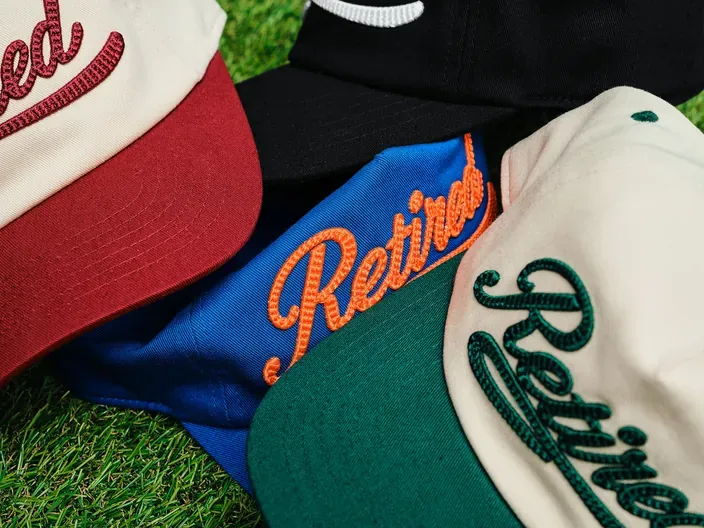
The short version
- Decide the shape first: structured or unstructured, five or six panels, crown height and brim.
- Six-panel caps have a seam down the front. Five-panel caps give you a clean front for a patch or a print.
- Embroidery and 3D puff are the classic cap logos. Woven and PVC patches hold more detail.
- Small text is the most common problem. Keep letters at least about 5 mm tall for embroidery.
- The inside counts: sweatband, taping and labels are what make a cap feel premium.
A cap looks simple. It isn't. Panel count, crown height, brim, closure, fabric and logo all change how it looks and who wears it. Here's every decision, in the order a factory will ask you to make them.
Choose the shape
Structured or unstructured
A structured cap has a stiff backing fused inside the front panels, so the crown stands up on its own and holds a logo flat. An unstructured cap has no backing. It sits lower, feels softer and looks more relaxed, like a classic dad cap.
Panels
| Style | What it is | Logo note |
|---|---|---|
| 6-panel | The most common cap. Six panels meet at the top button | A seam runs down the center front, under your logo |
| 5-panel | One wide front panel, four behind it | A clean front, great for patches and prints |
| Camper | A flatter 5-panel with a short brim | Low, wide front for a patch |
| Trucker | Foam or fabric front with mesh behind | Tall front for big logos and patches |
Embroidery on a six-panel cap runs across the center seam, and good digitizing allows for it. Fine detail and patches look cleaner on a seamless front.
Crown height
Caps are usually described as low, mid or high profile. A low crown sits close to the head and suits unstructured styles. A high crown has a tall, upright front, typical of fitted and snapback caps, and gives your logo more room. Mid sits in between and fits most people.
Brim
Curved or flat. A curved brim reads classic and sporty. A flat brim reads streetwear, and usually comes with a high crown. The underside can be a contrast color, and the edge can carry a line of stitching or a contrast "sandwich" layer.
Choose the closure
- Snapback: an adjustable plastic snap strap. Cheap, durable, a streetwear classic.
- Strapback: a fabric or leather strap with a metal buckle or clip. Feels more premium.
- Hook and loop: quick to adjust, common on sports and workwear caps.
- Stretch fit: no adjuster, just a band that stretches. Leaves a clean back for a logo.
- Fitted: sized, with a closed back. It means stocking several sizes.
The back of the cap is free branding space. A small embroidered logo, a woven label or a custom buckle all add up.
Choose the fabric
Cotton twill is the classic: durable, great for embroidery, and available in every color. Washed or garment-dyed cotton gives a soft, faded look. Polyester and nylon suit performance and outdoor caps, because they're light and dry fast. Corduroy, wool blends and canvas change the season and the price point.
Ask for the composition, and for a color swatch or a Pantone match. Caps are small, so a mismatch between the crown, the brim and the thread shows up fast.
Choose the logo technique
| Technique | Looks like | Watch for |
|---|---|---|
| Flat embroidery | Classic, textured, durable | Small text fills in |
| 3D puff embroidery | Bold, raised, standing off the cap | Needs wide strokes, no fine detail |
| Woven patch | Crisp, detailed, flat | Patch shape and edge finish |
| PVC or rubber patch | Molded, very 3D | A mold to make first |
| Flat color, fine detail | Works best on a seamless front |
On caps, embroidery is the default, because it lasts as long as the cap does. Our guide to embroidery vs screen printing vs DTF compares every technique in more depth.
Will your logo survive?
Small text is where most cap logos go wrong. A wordmark that looks sharp on screen can fill in completely when it's stitched at cap size. These are the usual minimums, by technique.
| Technique | Smallest letters | Thinnest lines |
|---|---|---|
| Flat embroidery | About 5 to 6 mm tall | About 1 mm |
| 3D puff embroidery | Bold letters only | Strokes of about 2 to 3 mm |
| Woven patch | About 2 to 3 mm tall | About 0.2 to 0.3 mm |
| PVC or rubber patch | Set by the mold | Raised lines of about 0.4 to 0.8 mm |
The details that make it premium
- Sweatband: the band inside the front. Cotton, moisture-wicking, or printed with your brand.
- Taping: the strip covering the inside seams. It can be printed with a message or a pattern.
- Labels: a woven label inside the back, plus a care label.
- Eyelets: the small vent holes. Stitched or metal, matching or in a contrast color.
- Top button: covered in the crown fabric, or in a contrast.
- Packaging: caps crush in a carton. Ask about cap boxes, card inserts or protective packing.
Beanies and bucket hats
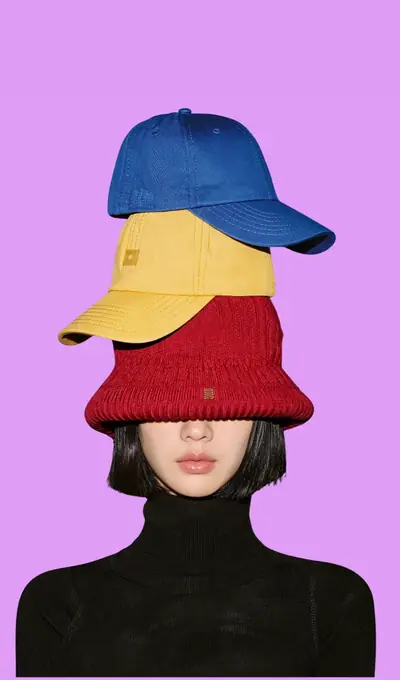
Headwear isn't only caps. Beanies are knitted, so a logo can be knitted in, embroidered on the cuff, or added as a woven or leather patch. Bucket hats are sewn from panels like a cap, with embroidery or prints all around. See every style, with minimums and lead times, on our custom cap and hat manufacturing page.
Questions
What's the difference between a structured and an unstructured cap?
A structured cap has a stiff backing inside the front panels, so it stands up and holds a logo flat. An unstructured cap has no backing, so it sits lower and feels softer.
Is a 5-panel or a 6-panel cap better for embroidery?
Both work. A 6-panel cap has a seam down the center front, which good digitizing allows for. A 5-panel cap has a seamless front, which suits patches, prints and fine detail.
What is 3D puff embroidery?
Embroidery stitched over a layer of foam, so the design stands up off the cap. It needs bold shapes and wide strokes, and doesn't hold fine detail.
What's the minimum order for custom caps?
It depends on the style and the logo technique. Decorating a stock cap usually allows lower minimums than a fully custom cap in your own fabric and shape. CWF starts at 50 units per style.
How long do custom caps take?
At CWF, samples typically take 3 to 10 days and production 30 to 45 days after you approve the sample, with shipping on top.
Written by the CWF production team. CWF makes apparel, bags, headwear, accessories, packaging and merch for brands, and runs sampling, production and quality control through a network of specialist factories. Updated Nov 7, 2026.
Got something to make? Start here.
Tell us what you have in mind. We reply within 24 hours with options, pricing and timelines.
Keep reading
 PricingCost per unit calculator
MOQ Explained: Minimum Order Quantities, and How to Get Them Down
Why minimums exist, what they really cost you, and seven honest ways to get them down. With a calculator for the real price per piece.
 ProductionTech pack checklist
What Is a Tech Pack? What Goes In One, and How to Make Yours
The document that turns your idea into something a factory can quote, sample and make the same way every time. Here's what goes in it.
 ProductionLaunch date planner
Manufacturing Lead Times: How Long Custom Production Really Takes
Every step between your brief and boxes at your door, how long each one takes, and how to plan backwards from a launch date.